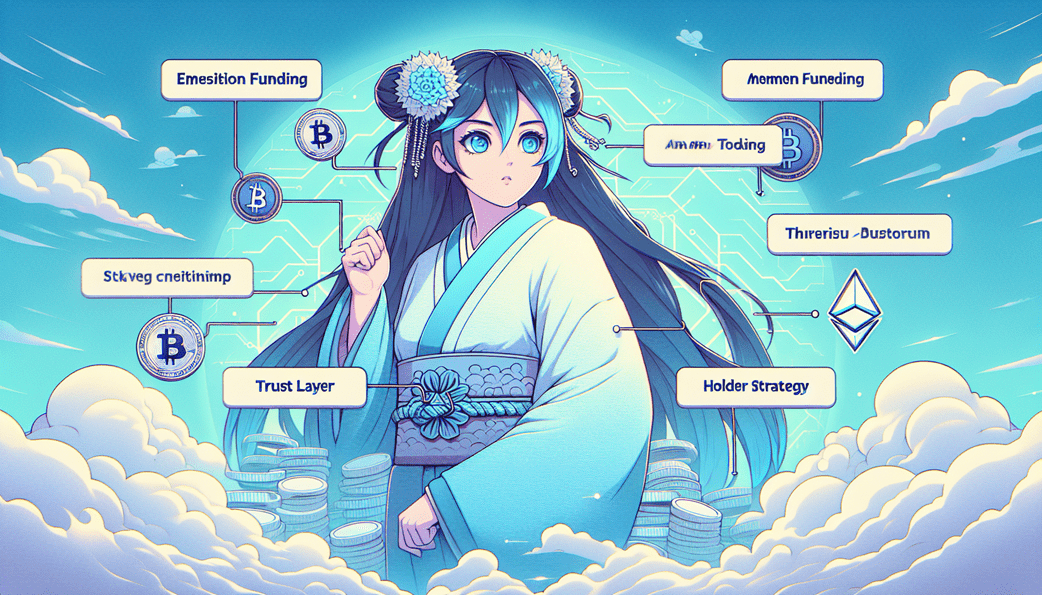
The anime-meme crossover genre has been producing tokens at a relentless pace, and most of them fade into the chart graveyard within weeks. NARUTO BONK has stuck around. The project just launched its staking program with a reward tier structure worth walking through, especially if you’re holding NARUTO and wondering whether to put it to work.
Why NARUTO BONK isn’t just another meme
Cultural appeal is a real thing in crypto, and NARUTO BONK taps into two overlapping communities — anime fans who are comfortable with on-chain assets, and meme traders who recognize viral energy when they see it. That combination has kept the project alive when peers with weaker community ties have gone quiet.
The team hasn’t tried to pivot NARUTO into something it isn’t. There’s no pretense of “revolutionary DeFi infrastructure” or “AI-powered blockchain solutions.” It’s a community meme with an anime wrapper, and the holders are fine with that. Honesty about what a project is goes a long way.
The tier structure at a glance
NARUTO BONK’s staking program has three tiers, with names that lean into the theme:
Genin Tier — The starter pool. No lockup, flexible withdrawals, base APR. Designed for holders dipping a toe in without full commitment. Most stakers end up here initially.
Chunin Tier — 45-day soft commitment. Early exit possible but with a reward forfeiture penalty. APR roughly 1.5x the Genin rate. This is the “I’m in but I want options” tier.
Jounin Tier — 120-day hard lock, no early withdrawal option. Highest APR in the program, plus access to community events like exclusive Discord roles and priority access to future partner drops.
The naming is a bit on the nose, but that’s kind of the point. A meme project that takes itself too seriously isn’t a meme project anymore. NARUTO BONK leans into the theme and the community seems to enjoy it.
How rewards get funded
This is the question that separates sustainable staking programs from unsustainable ones. For NARUTO BONK, the emissions pool was allocated upfront from the total supply — a fixed amount set aside specifically for stakers.
When that pool depletes, the team has stated publicly that rewards transition to a fee-sharing model tied to trading activity on the token. That’s the right long-term answer, but the transition is the hard part. Projects often stumble when emissions-funded rewards end because stakers unstake the moment the APR drops.
If you’re entering now, the math works in your favor for roughly 6-9 months before that transition becomes a question. Keep an eye on emission pool depletion — it’s visible on-chain.
Trust layer: what’s actually in place
Meme projects live or die by whether holders can trust the team not to pull a fast one. NARUTO BONK has addressed the major risk vectors:
- Locked liquidity. The LP tokens are secured through a liquidity locker, with the lock details publicly verifiable. No risk of liquidity pool being rugged during the lock window. This is non-negotiable for any token you plan to hold.
- Renounced contract ownership. The token contract’s ownership has been renounced, meaning no one can change fees, mint additional supply, or pause transfers. Whatever’s coded is final.
- Public team behavior. The team isn’t anonymous in the fraudulent sense — they interact daily with the community on Discord and Telegram. Actual accountability, not just screenshots of a team photo.
These fundamentals don’t guarantee anything about price action. What they do is eliminate the most catastrophic failure modes, which leaves performance dependent on actual community and execution.
Staking mechanics worth knowing
A few specifics about how the program actually works:
Rewards accrue continuously, not on a claim cycle. You can check your accumulated rewards at any time and they reflect real-time accrual. Claim whenever makes sense for you — there’s no window you need to hit.
Claiming doesn’t reset your tier progress. Your lockup countdown continues regardless of when you claim, so claiming frequently doesn’t cost you anything. The only action that breaks your tier is unstaking.
Compounding isn’t automatic, but you can manually restake claimed rewards into any pool. This is less elegant than auto-compound but reduces the gas overhead the staking contract has to manage.
Strategy for different holder types
If you’re a newer holder, start with Genin Tier. Get a feel for how the program operates, how rewards look in practice, and how the community behaves during the first staking cycle. You can always upgrade commitments later.
If you’ve been holding for a while and you’re confident in the project’s trajectory, Jounin Tier is where the yield math gets genuinely attractive. Just be realistic about the 120-day commitment — crypto happens fast, and if something fundamentally changes during that window, you’re still locked.
For people in between, Chunin Tier is the pragmatic choice. The early-exit penalty forfeits accumulated rewards but not your principal, so the downside is bounded.
What to watch going forward
The staking program is the beginning of a broader utility rollout for NARUTO. Holders should be watching for:
- Governance mechanics giving stakers voting power on community decisions
- Integration with other anime-themed BNB Chain projects for cross-pollination
- The eventual transition from emissions-funded to fee-funded rewards
Meme tokens that build out real utility have a better chance of surviving bear markets than pure narrative plays. Whether NARUTO BONK pulls that off is still an open question. But the staking program launch is a step in that direction.