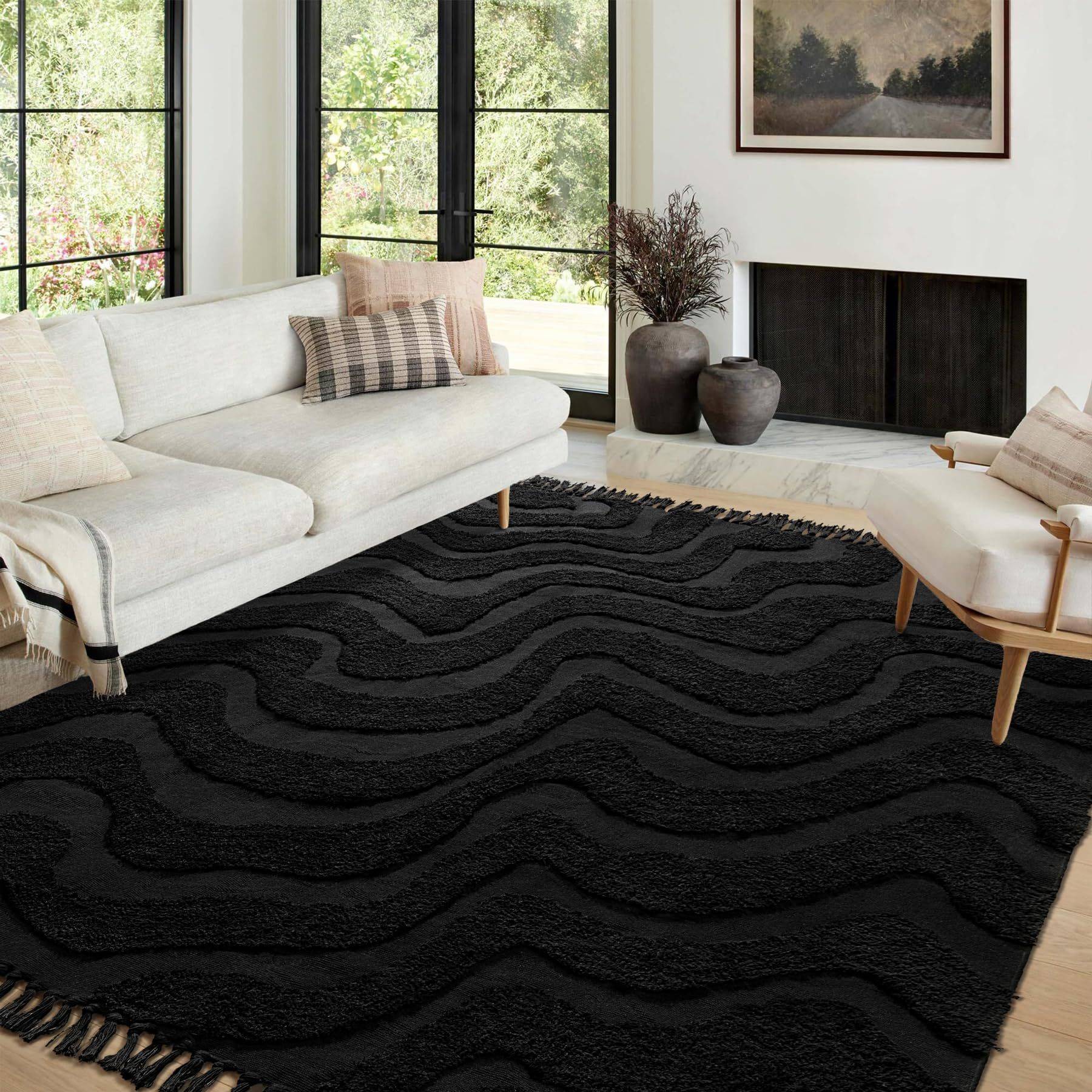
A rug does more than cover a floor. It sets the tone for an entire room, anchors your furniture, and often becomes the first thing guests notice when they walk through the door. Over the past few years, one style has moved from niche design blogs straight into mainstream interiors: rugs inspired by African textile traditions, bold mudcloth motifs, and tribal geometric patterns. If you’ve been considering one for your living room, bedroom, or even a covered patio, this guide walks through everything worth knowing — from the history behind the patterns to how to actually style one in a modern home.
Why Tribal Rugs Have Become a Design Staple
Interior design tends to move in cycles, and right now the pendulum has swung firmly toward pieces with texture, story, and visual depth. Plain, monochrome rugs once dominated minimalist spaces, but homeowners are increasingly looking for statement pieces that feel collected rather than mass-produced. That’s exactly the appeal of a traditional black rug drawn from West African design heritage — it carries the warmth of handcrafted textiles while still fitting comfortably into contemporary rooms.
Part of the reason these rugs work so well is contrast. A black and white tribal rug, for instance, pairs naturally with almost any wall color, furniture material, or lighting scheme. The high-contrast geometry reads as bold without clashing, which is why designers often reach for this combination when a room needs an anchor piece that won’t fight with everything else in the space.
Understanding the Patterns: Bogolan, Kuba, and Mudcloth
Most rugs in this category draw from a handful of historic textile traditions, each with its own visual signature.
Bogolan (mudcloth) originates from Mali, traditionally made by dyeing cotton fabric with fermented mud and plant-based pigments. The result is a series of intricate, hand-drawn symbols — zigzags, diamonds, crosshatching — arranged in bands across the fabric. When translated into rug form, bogolan patterns bring an earthy, almost calligraphic quality to a floor.
Kuba cloth comes from the Democratic Republic of the Congo and is known for its raffia-based weaving and asymmetrical geometric repetition. Kuba-inspired rugs tend to feel slightly more chaotic in the best way — busy enough to hide wear patterns in high-traffic rooms, but cohesive enough to still look intentional.
Tribal pattern rugs as a broader category often blend elements from several of these traditions, combining bold borders, repeating diamonds, and angular motifs into a single design. This is usually the category to look at if you want something that reads as “African-inspired” without committing to one specific regional style.
Choosing the Right Color Palette for Your Space
One of the most common questions when shopping for this style is whether to go bold or neutral. Both directions work, but they solve different problems.
Black and white tribal rugs are the safest entry point if you’re nervous about commitment. Because they’re essentially neutral despite being visually striking, they slot into existing color schemes without requiring you to repaint or re-accessorize anything. A black and white tribal rug under a beige sectional, a navy sofa, or even a brightly colored accent chair will almost always look intentional rather than mismatched.
If your room already leans neutral — think gray walls, white trim, light wood floors — a black tribal rug in a solid or near-solid dark tone can act as a grounding element. Dark rugs visually “weigh down” a room, which is particularly useful in open-plan spaces where furniture can otherwise feel like it’s floating.
For rooms that already have a strong color story, black tribal rugs with accents of rust, ochre, or deep green can tie disparate elements together. The trick is to pick a rug where at least one accent color already appears somewhere else in the room — a throw pillow, a piece of art, even a houseplant’s pot.
Where Tribal Rugs Work Best
Living rooms are the obvious choice, and for good reason. A large area rug — typically 8×10 feet for a standard living room — gives a tribal pattern enough visual real estate to actually read as a pattern rather than a busy blur. Place it so that at least the front legs of your sofa and chairs rest on it; this “anchors” the seating arrangement and makes the room feel more deliberately arranged.
Bedrooms benefit from a slightly different approach. A rug placed so that it extends about 18-24 inches beyond each side of the bed creates a soft landing zone and visually frames the bed as the room’s focal point. Tribal patterns in muted earth tones tend to work particularly well here, since bedrooms generally call for a calmer palette than living rooms.
Entryways and hallways are often overlooked, but a runner-sized tribal rug is one of the easiest ways to make a narrow space feel curated rather than purely functional. Because these areas see heavy foot traffic, a busier pattern is actually an advantage — it disguises dirt and wear far better than a solid color would.
Home offices have become a major category for statement rugs over the last several years, and tribal patterns are a popular choice for good reason. They add personality to what is often the most utilitarian room in the house, without requiring any commitment beyond the rug itself.
Materials and Durability: What to Look For
Not all tribal-print rugs are constructed the same way, and the material affects both how the rug feels underfoot and how it holds up over time.
Cotton and cotton-blend rugs are common for this style and tend to have a flatter weave, which makes them easier to clean and a good fit for kitchens, dining areas, or kids’ rooms where spills are likely. They’re typically lighter weight, which also makes them easier to rotate seasonally or move between rooms.
Wool and wool-blend options offer more cushioning and tend to hold color more vibrantly over time, which matters for patterns with high contrast like a black and white tribal rug — the white sections stay crisp rather than yellowing the way some synthetic fibers can.
For outdoor or semi-outdoor spaces — covered patios, sunrooms, or porches — look specifically for rugs designed with weather-resistant materials. Tribal patterns translate beautifully to outdoor settings, but a standard indoor rug left outside will deteriorate quickly regardless of how striking the design is.
Caring for Your Rug
Most tribal and mudcloth-style rugs benefit from regular vacuuming on a low-suction or no-beater-bar setting, which prevents fraying along the pattern’s edges. For spot cleaning, a mild detergent and cold water are usually sufficient — avoid hot water on rugs with bold color contrasts, since heat can cause dye bleeding between dark and light sections.
Rotating your rug every few months helps even out fading from sunlight exposure, particularly important for rugs placed near windows. If you notice the colors on one section starting to look more muted than the rest, that’s usually your cue to rotate.
Styling Tips: Making the Pattern Work With What You Have
A common hesitation with bold patterns is the fear of clashing. In practice, tribal rugs are more forgiving than most people expect, but a few guidelines help:
Keep nearby textiles simpler. If your rug has a busy geometric pattern, solid-color or subtly textured throw pillows and curtains let the rug remain the visual centerpiece rather than competing with it.
Repeat one color from the rug elsewhere in the room — even something small, like a vase or a stack of books — to create a sense of cohesion without forcing a full color-matching exercise.
Don’t be afraid of wood tones. Tribal patterns, especially those rooted in mudcloth traditions, pair naturally with warm or mid-tone wood furniture, which echoes the earthy origins of the design.
Finding the Right Piece
Whether you’re drawn to the high-contrast clarity of a black and white tribal rug, the grounded simplicity of an all-black design, or a more elaborate piece with traditional bogolan or Kuba-inspired patterning, the right rug ultimately comes down to scale, palette, and how much visual energy you want a single piece to bring into a room.
For anyone exploring this style, Bynelo’s collection of tribal pattern rugs brings together a wide range of these traditional prints — from bold black and white designs to warmer mudcloth and bogolan motifs — so you can compare options side by side and find a piece that fits both your space and your style. Browsing a dedicated collection of African-inspired carpets and rugs also makes it easier to see how different sizes and colorways look in context before committing to one for your home.
Final Thoughts
Tribal and African-print rugs occupy a sweet spot in interior design: bold enough to function as a statement piece, but rooted in patterns that have been refined over generations, which gives them a timeless quality that trend-driven designs often lack. Whether your space calls for the stark elegance of black and white, the grounding presence of solid black, or the layered richness of traditional bogolan and Kuba motifs, there’s a version of this style that will work — and once it’s down, it tends to become the piece everything else in the room quietly orients around.