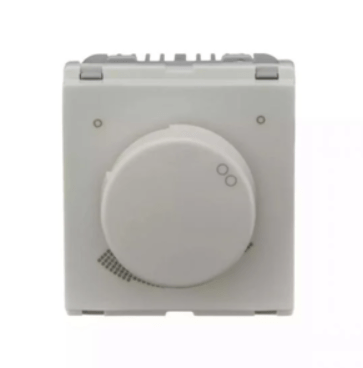
The ceiling fan is one of the most important comfort-providing appliances in Indian homes. In a country where air conditioning is not universally accessible and electricity costs are a significant household concern, the ceiling fan provides cost-effective cooling through air movement rather than refrigeration. The fan regulator is the device that controls ceiling fan speed, and its quality and type directly affect the fan’s performance, energy consumption, noise level, and operational life. Lauritz Knudsen Smartshop provides a comprehensive range of fan regulators and ceiling fan regulators for every residential and commercial application.
Types of Fan Regulators
Fan regulators for ceiling fans fall into two distinct technology categories, each with its own performance characteristics, energy implications, and price points.
Resistive Step Fan Regulators
Resistive step fan regulators, also called traditional fan regulators or wire wound regulators, control fan speed by inserting a resistance in series with the fan motor winding. Higher resistance reduces the voltage available to the motor, slowing the fan speed. This type of regulator is simple, robust, and inexpensive but wastes energy at lower speed settings because the resistance dissipates electrical energy as heat regardless of the fan speed.
Electronic Fan Regulators
Electronic fan regulators use electronic circuits to control the power delivered to the fan motor without resistive energy dissipation. They typically use thyristor or triac-based phase control circuits that reduce the effective supply voltage to the fan by clipping a portion of each half cycle of the AC waveform. Electronic regulators are more energy-efficient than resistive types at lower speeds, produce less heat, and are available in both step and continuously variable forms.
BLDC Fan Compatibility
Modern BLDC ceiling fans, which use brushless DC motors for maximum energy efficiency, require compatible fan regulators that can control the fan’s integrated driver electronics. Standard resistive and thyristor-based electronic regulators are not compatible with BLDC fans. BLDC-compatible regulators from Lauritz Knudsen Smartshop ensure correct operation and the full energy-saving performance of BLDC ceiling fans.
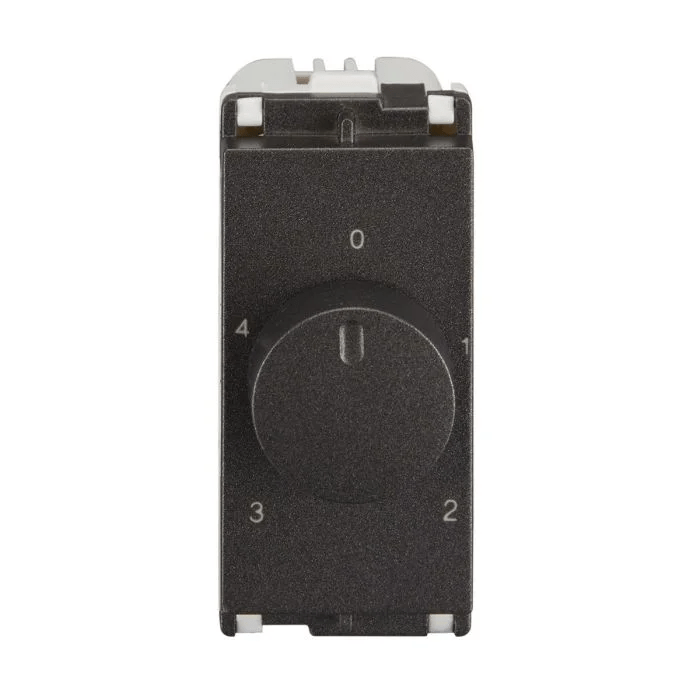
Ceiling Fan Regulator From Lauritz Knudsen SmartShop
The ceiling fan regulator range from Lauritz Knudsen Smartshop is designed to integrate with the modular switch system, providing fan speed control in a modular format that fits standard gang boxes alongside switches and sockets.
SWITCHUP Fan Regulator
The ceiling fan regulator is available in the SWITCHUP modular format from Lauritz Knudsen SmartShop, maintaining the same flat, minimalist aesthetic as the rest of the SWITCHUP range. This ensures that fan speed control is visually integrated with the lighting switches and power sockets in the same switch plate rather than requiring a mismatched standalone regulator.
Step vs Continuous Control
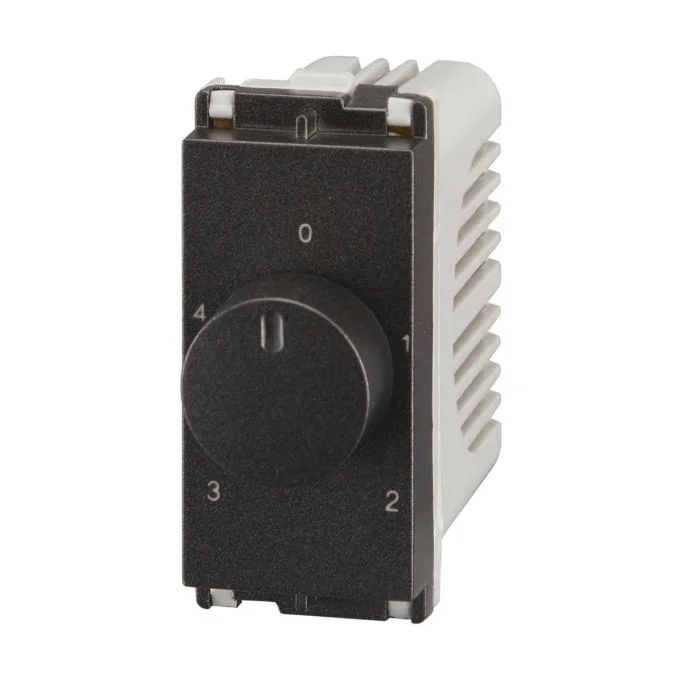
Step-type ceiling fan regulators provide a defined number of discrete speed settings, typically five steps, that the user selects by rotating the control knob. Continuously variable regulators allow infinitely adjustable speed setting across the full range from minimum to maximum, providing finer control of comfort level and energy consumption.
Smart Fan Regulator
Smart ceiling fan regulators from Lauritz Knudsen Smartshop integrate with home automation systems to enable remote control of fan speed through smartphone apps and voice assistants. They can be programmed to adjust fan speed automatically based on time of day, temperature, or occupancy, providing comfort management without manual intervention.
Energy Savings With the Right Fan Regulator
The type of ceiling fan regulator used has a meaningful impact on the electricity consumed by the fan, particularly at reduced speed settings.
- A resistive fan regulator at 50 percent speed typically dissipates approximately 25 to 30 percent of the full-speed power consumption as heat in the regulator, with no energy saving compared to full speed operation.
- An electronic fan regulator at 50 percent speed reduces the power delivered to the fan motor, providing genuine energy savings of 20 to 40 percent compared to full-speed operation depending on the fan and regulator combination.
- A BLDC fan with compatible smart regulator can reduce fan energy consumption by 50 to 70 percent compared to a conventional fan with resistive regulator at equivalent air delivery and comfort level.
Installation and Compatibility
Ceiling fan regulators must be compatible with the fan motor type to provide correct speed control without noise, vibration, or premature motor failure.
- Conventional induction motor fans are compatible with both resistive and electronic fan regulators. Electronic regulators are preferred for energy efficiency.
- BLDC fans must use only compatible BLDC fan regulators. Using an incompatible regulator with a BLDC fan can damage the fan’s driver electronics and void the warranty.
- The regulator’s current rating must exceed the fan’s full load current to prevent overheating during continuous operation.
Troubleshooting Fan Regulator Problems
Common fan regulator problems include humming or buzzing noise during operation, inconsistent speed control, overheating of the regulator, and failure to control fan speed at all. Understanding the cause of each symptom helps in determining whether repair or replacement is required.
Humming Noise
Humming or buzzing from an electronic fan regulator is typically caused by the fan motor reacting to the phase-cut waveform that the regulator produces. Some fans are more susceptible to this than others. BLDC-compatible regulators with smooth output waveforms eliminate this problem for compatible BLDC fans.
Regulator Overheating
A fan regulator that becomes excessively hot during operation may be operating a fan that draws more current than the regulator is rated for, or may have developed an internal fault. Check that the fan current matches the regulator rating and replace the regulator if overheating continues after confirming correct load matching.
Conclusion
Fan regulators and ceiling fan regulators from Lauritz Knudsen SmartShop provide Indian homeowners with the complete range of fan speed control solutions from simple resistive regulators to smart BLDC-compatible regulators integrated in the SWITCHUP modular system. Backed by 70 years of electrical engineering heritage, these products deliver the reliability and energy efficiency that Indian ceiling fan installations demand.